What Is an IUD?
An IUD (Intrauterine Device) is a long-term, highly effective, and completely reversible contraceptive method. A small T-shaped device (approximately 3 cm) is placed inside the uterine cavity by a specialist doctor, preventing fertilization and implantation.
This is the most popular contraceptive method worldwide, used by over 150 million women. In Vietnam, the IUD is the most widely used long-term contraceptive, especially popular among women who have already given birth.
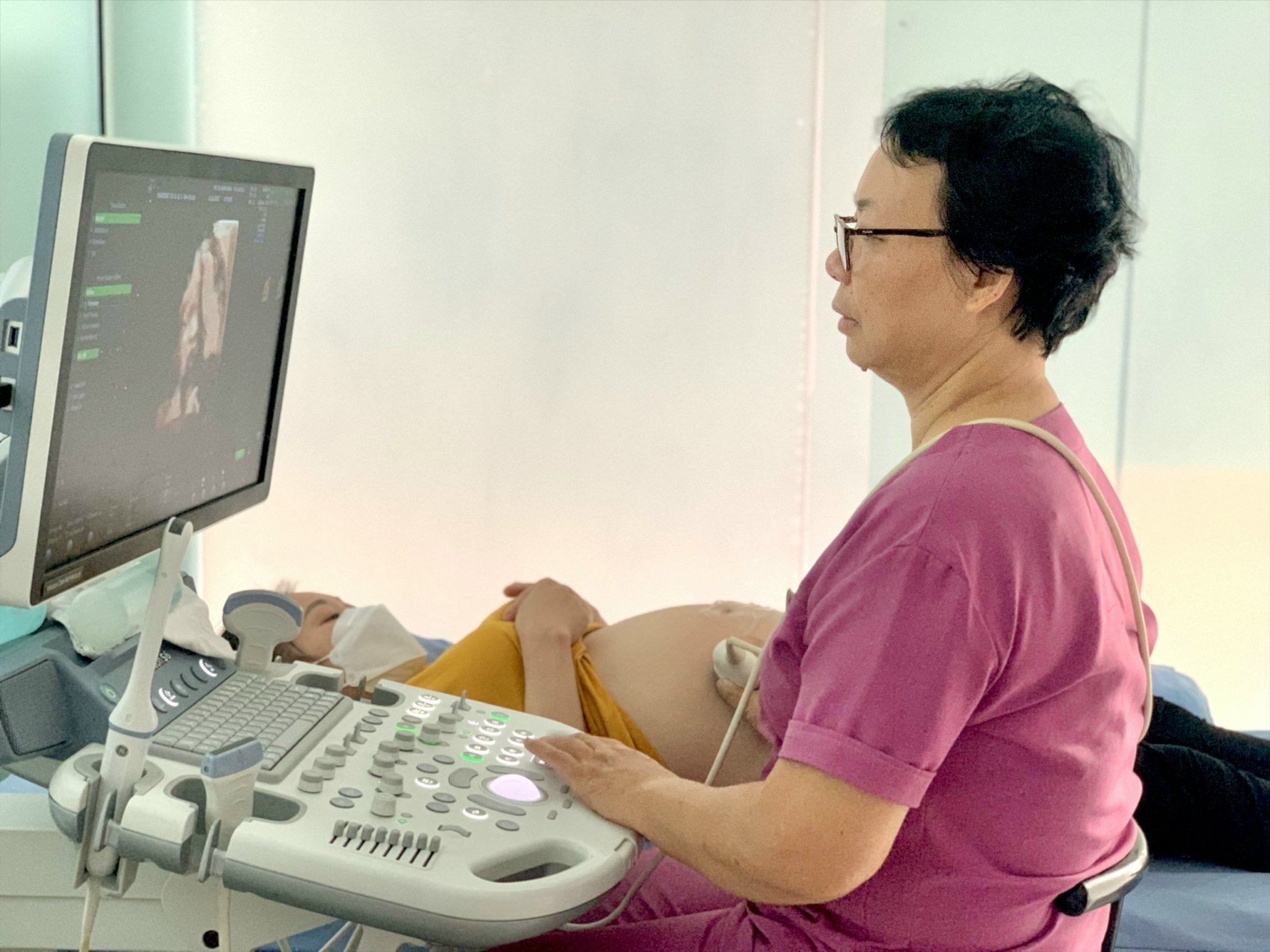
BSCKI. Trần Thị Thúy Lâm, with over 30 years of OB-GYN and family planning experience, says: “The IUD is the safest, most effective, and most convenient method for women who have given birth and want long-term contraception. One insertion, peace of mind for years.”
How IUDs Work
Copper IUD mechanisms:
- Copper ions released from the IUD create an environment toxic to sperm — reducing sperm motility and survival
- Causes a mild sterile inflammatory reaction inside the uterus — creating an unfavorable environment for sperm and embryos
- Alters the uterine lining — reduces embryo implantation potential (secondary mechanism)
- Changes cervical mucus — limits sperm passage
Hormonal IUD mechanisms:
- Releases local progestogen — thickens cervical mucus, blocking sperm
- Partially suppresses ovulation (40-50% of cycles)
- Thins the uterine lining — reduces implantation potential while also reducing menstrual flow
Detailed IUD Types
1. Copper IUD (Cu-IUD)
Types commonly available in Vietnam:
- TCu 380A — Most popular, T-shaped, 380 mm2 copper surface area
- Multiload Cu 375 — Design suits various uterine sizes
- Nova T — Softer design, less painful
Features:
- Contains copper, no hormones
- Effective: 5-10 years depending on type (TCu 380A effective up to 12 years)
- Suitable for women who prefer not to use hormones
- Can be used as emergency contraception (within 5 days of unprotected intercourse) — over 99% effective
- Does not affect reproductive hormones
Disadvantage: May increase menstrual flow and period cramps during the first 3-6 months.
2. Hormonal IUD (Mirena, Kyleena)
Mirena:
- Releases levonorgestrel (progestogen) locally at a low dose (20 mcg/day)
- Effective: 5-7 years
- Reduces menstrual flow by 90% — many women have very light periods or stop menstruating entirely (20-30%)
- Significantly reduces period cramps
- FDA-approved for treating heavy menstrual bleeding (menorrhagia)
Kyleena (smaller hormonal IUD):
- Lower hormone dose than Mirena
- Smaller size — suitable for women who haven’t given birth
- Effective for 5 years
Especially suitable for:
- Women with heavy periods, prolonged bleeding
- Women with severe period cramps
- Women with endometriosis
- Women needing contraception + menstrual management simultaneously
Copper IUD vs Hormonal IUD Comparison
| Criteria | Copper IUD | Hormonal IUD (Mirena) |
|---|---|---|
| Effectiveness | 99.2% | 99.8% |
| Duration | 5-12 years | 5-7 years |
| Hormones | None | Yes (local progestogen) |
| Menstruation | May increase | Significantly reduced/absent |
| Period cramps | May increase | Reduced |
| Emergency contraception | Yes | No |
| Safe for breastfeeding | Yes | Yes |
| Cost | Lower | Higher |
Comprehensive Benefits of IUDs
- Highly effective — Over 99%, higher than birth control pills (91% typical) and condoms (82% typical)
- Long-lasting — 5-12 years depending on type, no daily pill to remember
- Completely reversible — Remove the IUD and pregnancy can occur in the very next cycle
- Very low cost — Averages just tens of thousands VND per month
- Safe while breastfeeding — Both types do not affect breast milk
- No need to remember — One insertion, years of peace of mind
- Discreet — No one knows you’re using it
- No effect on sexual intercourse — No vaginal dryness, no reduced desire
- Emergency contraception — Copper IUD can be inserted within 5 days after unprotected intercourse
Read more: Comparison of all safe contraceptive methods
Detailed IUD Insertion Procedure
Before Insertion
- Gynecological exam — Assess vagina, cervix, rule out infections. If vaginitis or cervicitis is present, treat first.
- Ultrasound — Assess uterine size, shape, rule out fibroids, polyps, uterine abnormalities
- Rule out pregnancy — Pregnancy test or beta-hCG blood test
- Counseling — Doctor advises on choosing the right IUD type for your needs and health
During Insertion (5-10 minutes)
- Patient in gynecological position
- Doctor disinfects the examination area thoroughly
- Cervical stabilization with tenaculum
- Measure uterine depth with a sound — determine appropriate size
- Insert the IUD through the cervical canal into the uterine cavity using a specialized inserter
- IUD opens into T-shape inside the uterus
- Trim IUD strings to appropriate length (about 2-3 cm outside cervix)
- Verify IUD position by ultrasound (if needed)
Sensation during insertion: May feel mild discomfort, similar to menstrual cramping as the IUD passes through the cervix. Usually lasts only a few seconds. Some women feel almost nothing.
Post-Insertion Care
- May have mild cramping for 1-2 days — take paracetamol or ibuprofen
- Light spotting for 1-2 days is normal
- Abstain from intercourse for 1-2 weeks for uterine stabilization
- No tampons for the first 2 weeks
- Follow-up checkup after 1 month
- Self-check IUD strings monthly after each period
Best Timing for IUD Insertion
| Timing | Advantage | Notes |
|---|---|---|
| During menstruation | Cervix is open, less painful, confirms not pregnant | Most preferred timing |
| 6-8 weeks after vaginal birth | Uterus has returned to normal | Safe, common |
| Right after C-section | Inserted during surgery or 48 hours post-birth | Convenient, one-time |
| After miscarriage/procedure | Immediate contraception, prevents unplanned pregnancy | Insert immediately if no infection |
| Any day of the cycle | If certain not pregnant | Need to rule out pregnancy with testing |
Who Should and Should Not Use an IUD?
Especially Suitable For
- Women who’ve given birth wanting long-term contraception
- Women who often forget daily pills
- Breastfeeding women
- Women who prefer no hormones (choose copper IUD)
- Women with heavy periods, severe cramps (choose Mirena)
- Need emergency contraception (copper IUD, within 5 days)
Contraindications (DO NOT insert when)
- Currently pregnant or suspected pregnancy
- Untreated gynecological infection (vaginitis, cervicitis, PID)
- Uterine fibroids distorting the uterine cavity
- Cancer of cervix or uterus
- Unexplained abnormal vaginal bleeding
- Severe uterine abnormality
- Breast cancer (contraindicated for hormonal IUD)
Side Effects and Management
Common Side Effects (mostly resolve after 3-6 months)
- Mild cramping for 1-3 days initially — Take pain relief, rest
- Spotting between periods for 1-3 months — Usually resolves
- Heavier periods (copper IUD) — Supplement iron if needed, switch to Mirena if too heavy
- Lighter or absent periods (hormonal IUD) — Completely normal, not dangerous
Rare Complications
- Expulsion: 2-10% in the first year, higher in women who haven’t given birth
- Infection: Slightly increased risk in the first 20 days, then returns to normal
- Uterine perforation: Extremely rare (1/1000), usually occurs during insertion, not afterward
When to See a Doctor Immediately
Contact your doctor right away when:
- Severe lower abdominal pain — possibly IUD expulsion, infection, or ectopic pregnancy
- Fever, foul-smelling discharge — signs of infection
- Heavy abnormal bleeding (soaking more than 1 pad per hour)
- IUD strings feel longer than usual or cannot find strings — IUD may have shifted or perforated
- Suspected pregnancy (missed period with pregnancy symptoms) — very rare (<1%)
- Persistent pain during intercourse
Practical Tips for IUD Users
- Choose the right type: Heavy periods — Mirena. No hormones — copper IUD. Your doctor will advise the best fit.
- Self-check strings monthly: After your period, gently feel inside the vagina for strings at the cervix. If absent or longer, see your doctor.
- Keep follow-up appointments: After 1 month, then every 6 months to check IUD position.
- Remember the insertion date: To know when a replacement is needed.
- Combine with condoms if at risk of STDs — IUDs do not prevent STDs.
IUD Services at Phòng Khám Bác Sỹ Lâm
Phòng Khám Sản Phụ Khoa Bác Sỹ Lâm provides comprehensive family planning services. All doctors hold Family Planning Practice Certificates issued by the Ministry of Health, with BSCKI. Đinh Thị Hiền holding multiple specialized certifications in IUD insertion and contraceptive implants.
Services include:
- Free consultation to choose the right IUD type
- Gynecological exam, ultrasound before insertion
- Gentle, safe insertion under sterile conditions
- Ultrasound to verify IUD position after insertion
- Follow-up checkup after 1 month
- IUD removal and replacement when needed
- Transparent, reasonable pricing
Looking for a long-term, safe contraceptive method? Visit Phòng Khám Bác Sỹ Lâm for counseling and choosing the best IUD for you.
Call now: 0986 321 000 | Address: 125 Hàm Nghi, Kim Tân, Lào Cai
The clinic is open Monday to Saturday, morning 7:30-11:30, afternoon 1:30-5:00. Appointments accepted by phone and Zalo.