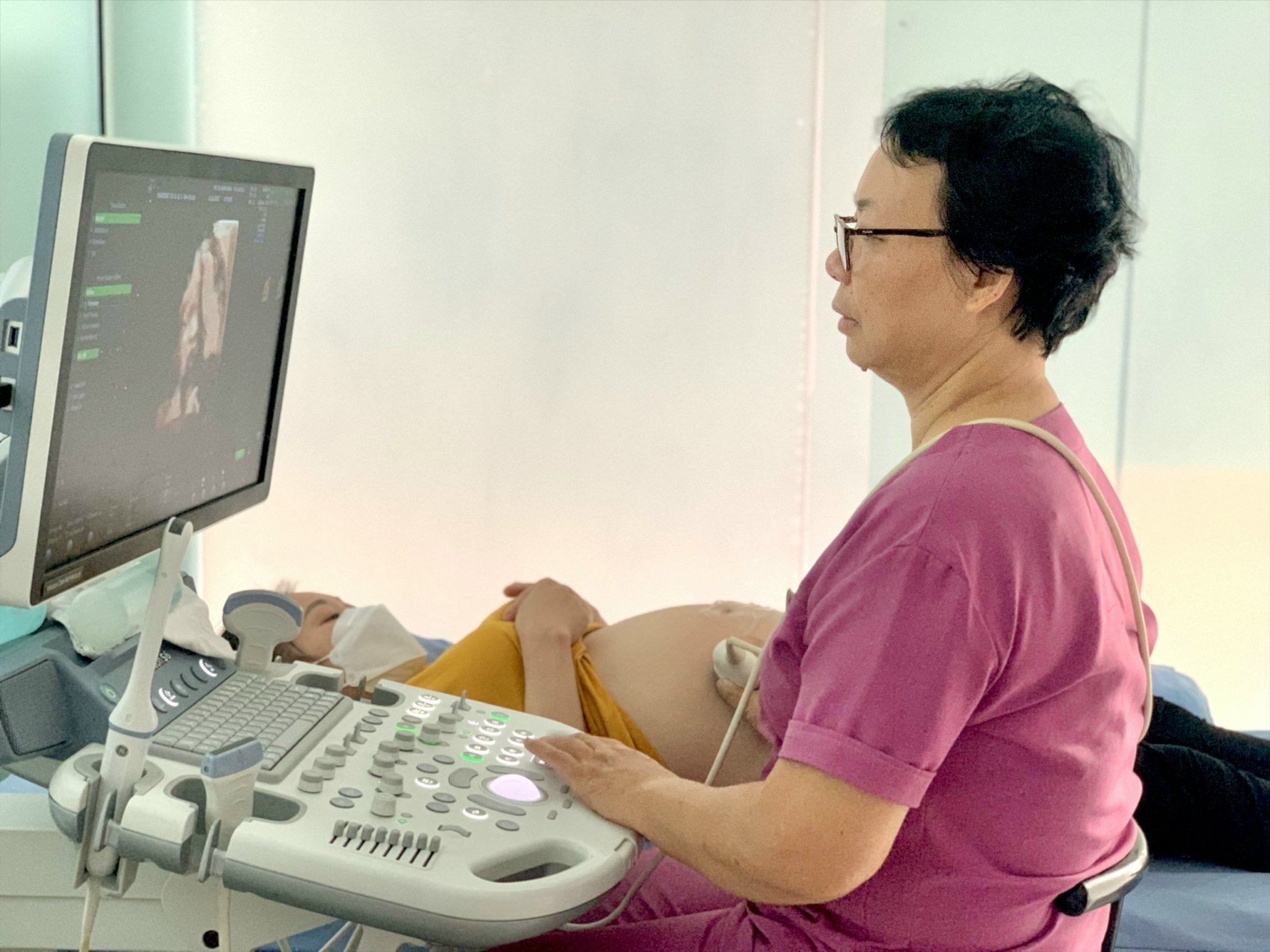
What Is Vaginal Discharge? Understanding Vaginal Secretions
Vaginal discharge (also called leukorrhea) is a natural secretion produced by glands in the cervix and vaginal wall. Vaginal discharge plays a very important role in women’s health:
- Moisturizes the vaginal lining, preventing dryness
- Self-cleaning — removes dead cells and bacteria
- Protects against infection by maintaining an acidic pH (3.8-4.5)
- Supports reproduction — cervical mucus helps sperm travel during ovulation
Every woman has vaginal discharge — this is completely normal. However, when discharge changes abnormally in color, odor, or volume, or is accompanied by uncomfortable symptoms, it may be a warning sign of a condition requiring examination.
BSCKI. Tran Thi Thuy Lam, with over 30 years of obstetric and gynecological experience, shares: “Abnormal discharge is the top reason women come for gynecological exams. Knowing how to distinguish normal from abnormal discharge helps detect gynecological conditions early.”
Normal Discharge Changes Throughout the Menstrual Cycle
An important thing to know: normal discharge is not constant but changes throughout the menstrual cycle due to the influence of estrogen and progesterone:
| Phase | Discharge characteristics | Dominant hormone |
|---|---|---|
| After period (days 5-9) | Scant, dry | Low estrogen |
| Near ovulation (days 10-14) | Clear, stretchy, egg-white consistency | Highest estrogen |
| After ovulation (days 15-22) | White, opaque, thicker | Rising progesterone |
| Before period (days 23-28) | Thick, slightly yellow, decreasing volume | Declining hormones |
If your discharge follows this pattern, it is normal physiological discharge and there is no need to worry.
Identifying Abnormal Discharge by Color
| Color | Normal? | Possible cause | What to do |
|---|---|---|---|
| Clear | Normal | Physiological, ovulation | Nothing needed |
| White, opaque | Normal | Beginning/end of cycle | Nothing needed |
| White, thick like cottage cheese | Abnormal | Candida yeast | See doctor |
| Light yellow | May be normal | Check if accompanied by odor | Monitor |
| Dark yellow / green | Abnormal | Trichomonas, gonorrhea, cervicitis | See doctor |
| Gray | Abnormal | Bacterial vaginosis (BV) | See doctor |
| Pink / red | Abnormal | Abnormal bleeding, cervicitis, cervical polyp | See doctor |
| Brown | May be normal | Old blood after period, or pathology | Monitor, see doctor if prolonged |
Identifying by Odor
| Odor | Meaning | Cause for concern? |
|---|---|---|
| Odorless / mild | Normal | No |
| Slightly sour | Normal (protective acidic pH) | No |
| Fishy (like fish) | Bacterial vaginosis (BV) | Yes — see doctor |
| Strong foul odor | Severe infection, foreign body (forgotten tampon) | Yes — see doctor immediately |
| Sweet, unusual | May be diet or medication changes | Monitor |
Detailed Causes of Abnormal Discharge
1. Vaginal yeast infection (Vulvovaginal Candidiasis)
This is the most common type of vaginitis, affecting 75% of women at least once in their lifetime.
Identifying features:
- White, thick cottage cheese-like or yogurt-like discharge
- Severe itching of the vulva and vagina — the most prominent symptom
- Burning during urination, pain during intercourse
- Red, swollen vulva, possibly with scratch marks
Risk factors:
- Prolonged antibiotic use (disrupts bacteria-yeast balance)
- Poorly controlled diabetes
- Pregnancy (hormonal changes favor yeast growth)
- Immunodeficiency (HIV, chemotherapy)
- Tight, moist underwear
Treatment: Antifungal vaginal suppositories (clotrimazole, miconazole) or oral medication (fluconazole). Recurrent cases (>4 times/year) require maintenance treatment.
2. Bacterial Vaginosis (BV)
Accounts for 40-50% of cases of vaginitis, the most common type in women of reproductive age.
Identifying features:
- Gray or whitish-gray, thin, homogeneous discharge
- Distinctive fishy odor — noticeably worse after sexual intercourse or washing with soap
- Usually no itching (unlike yeast)
- May be asymptomatic (50% of cases)
Cause: Disrupted vaginal microbiome — protective Lactobacillus bacteria decrease while anaerobic bacteria (Gardnerella, Atopobium) increase.
Risk factors:
- Vaginal douching
- Multiple sexual partners
- Intrauterine contraceptive devices
- Smoking
Treatment: Metronidazole or clindamycin antibiotics (oral or vaginal). BV frequently recurs (30% within 3 months), requiring adherence to treatment and addressing risk factors.
3. Trichomonas vaginalis infection
A sexually transmitted infection caused by the single-celled parasite Trichomonas vaginalis.
Identifying features:
- Yellow-green, frothy discharge, large volume
- Severe itching, pain during intercourse, burning during urination
- Red vaginal walls, possible red spots on the cervix (strawberry cervix)
- 20-50% of infected women are asymptomatic
Treatment: Metronidazole or tinidazole antibiotics. Partner treatment is mandatory to prevent reinfection. Abstain from intercourse during treatment.
4. Cervicitis
Identifying features:
- Yellow or purulent discharge from the cervical canal
- Bleeding after intercourse or between periods
- Pain during deep intercourse
- Caused by Chlamydia, gonorrhea, or HPV
Read more: Cervicitis: signs, causes, and treatment
5. Other causes
- Foreign body in vagina (forgotten tampon, condom) — causes extremely foul discharge
- Cervical polyp — bloody discharge
- Cervical cancer — bloody discharge with foul odor (late stage)
- Allergies — to feminine wash, condoms, lubricants
6. Discharge changes with physiological conditions
- Pregnancy — Discharge noticeably increases due to rising estrogen. Normal if clear/white, odorless. See a doctor immediately if discharge has an odor, abnormal color, or is accompanied by itching.
- Ovulation — Clear, stretchy, egg-white discharge (best sign for conception)
- Perimenopause — Reduced discharge, vaginal dryness due to estrogen decline
- After intercourse — Discharge may temporarily increase, which is a normal response
When Should You See a Doctor?
You should visit a gynecologist immediately when discharge shows these changes:
See a doctor soon (within 1-2 days):
- Discharge changes to abnormal color (dark yellow, green, gray, pink) lasting over 3 days
- Foul or strong fishy odor that doesn’t resolve despite proper hygiene
- Accompanied by severe itching or burning in the genital area
- Sudden significant increase in volume
See a doctor urgently (same day):
- Accompanied by lower abdominal pain or fever — signs of spreading infection
- Accompanied by bleeding outside your period or after intercourse
- Purulent discharge with very foul odor — suspected foreign body or severe infection
- Currently pregnant with abnormal discharge — risk of gynecological infection during pregnancy
Regular checkups (every 6 months):
- Even without abnormal symptoms
- Especially important for sexually active women
Diagnosing Abnormal Discharge at the Clinic
At Phong Kham Bac Sy Lam, the diagnostic process for abnormal discharge includes:
- Medical history — Onset, characteristics, accompanying symptoms, treatment history
- Clinical examination — Female doctor directly observes discharge characteristics, evaluates vagina and cervix
- Vaginal pH measurement — pH > 4.5 suggests BV or Trichomonas; normal pH suggests yeast
- Whiff test — 10% KOH applied to the sample; positive fishy odor suggests BV
- Wet mount microscopy — Directly visualize Candida yeast, Trichomonas, clue cells (BV)
- Bacterial/yeast culture — Precisely identify the microorganism and antibiotic sensitivity
- STI tests — PCR for Chlamydia, gonorrhea, Mycoplasma if sexually transmitted infection is suspected
- Pap smear — Rule out abnormal cervical cell changes
Treating Abnormal Discharge
Treatment principles
Most important: Treatment must be targeted to the cause. Each type of infection requires different medication — using the wrong medication not only fails to cure but can worsen the condition.
| Cause | Treatment | Duration | Treat partner? |
|---|---|---|---|
| Candida yeast | Antifungals (fluconazole, clotrimazole) | 1-7 days | Not required |
| Bacterial BV | Metronidazole or clindamycin | 5-7 days | Not needed |
| Trichomonas | Metronidazole or tinidazole | 7 days | Mandatory |
| Chlamydia | Azithromycin or doxycycline | 7-14 days | Mandatory |
| Gonorrhea | Ceftriaxone + azithromycin | Single dose | Mandatory |
Common self-treatment mistakes
- Buying vaginal suppositories without knowing the cause — Using antifungals when actually having BV won’t work
- Stopping medication early when symptoms improve — Leads to recurrence and drug resistance
- Douching with strong feminine wash — Destroys the protective microbiome, worsening infection
- Only treating yourself, not your partner (for STIs) — Continuous reinfection
- Using broad-spectrum antibiotics for extended periods — Causes microbial imbalance, prone to yeast
Preventing Abnormal Discharge — Practical Advice
Proper intimate hygiene
- Wash externally only with clean water or pH-appropriate feminine wash (3.8-4.5), 1-2 times daily
- Do not douche inside the vagina — the vagina has its own self-cleaning mechanism
- Wash from front to back — Prevent bacteria from the anus entering the vagina
- Dry thoroughly after washing, avoid moisture
Daily habits
- Wear cotton underwear — Breathable, good absorption. Avoid tight nylon or lace
- Change underwear daily, wash well and sun-dry
- Don’t use perfume or scented soap in the genital area — Causes irritation
- Change sanitary pads every 3-4 hours during menstruation. Limit prolonged tampon use
Proactive prevention
- Practice safe sex — Use condoms properly
- Regular gynecological checkups — Every 6 months
- Control blood sugar well if diabetic
- Limit unnecessary antibiotic use
Examination and Treatment at Phong Kham Bac Sy Lam
Phong Kham San Phu Khoa Bac Sy Lam is a reputable gynecological examination and treatment facility in Lao Cai, with complete testing equipment:
- Female specialist doctor examines directly — private, gentle care
- On-site testing: wet mount, pH measurement, whiff test — same-day results
- Specialized testing: culture, STI PCR — in coordination with Medlatec Hospital Hanoi
- Cause-targeted treatment — specific prescriptions with detailed instructions
- Recurrence prevention counseling — especially important for recurring infections
BSCKI. Tran Thi Thuy Lam has over 30 years of experience in gynecological examination and treatment, and is a member of the Vietnam Sexual Health Association.
Abnormal vaginal discharge may be a sign of a condition requiring treatment. Don’t self-medicate — see a doctor for accurate diagnosis and proper treatment.
Call now: 0986 321 000 | Address: 125 Ham Nghi, Kim Tan, Lao Cai
The clinic is open Monday through Saturday, mornings 7:30-11:30, afternoons 13:30-17:00. Appointments accepted by phone and Zalo.