What is endometriosis?
Endometriosis is a condition where tissue similar to the uterine lining grows outside the uterine cavity. This displaced tissue still responds to female sex hormones, growing and shedding with each menstrual cycle just like normal endometrium, but the blood has no way to exit the body.
The condition affects approximately 10% of women of reproductive age worldwide, equivalent to about 190 million women. In Vietnam, the disease is being diagnosed more frequently thanks to improved health awareness and diagnostic capabilities.
Common locations
Endometrial tissue can appear in many locations:
- Ovaries: Forms endometriomas (chocolate cysts) — the most common location
- Pelvic peritoneum: Behind the uterus, uterine ligaments
- Fallopian tubes: Causes adhesions, tubal obstruction
- Rectovaginal septum: Causes deep pain during intercourse
- Bladder, intestines: Causes cyclical urinary and digestive symptoms
- Rare locations: Lungs, diaphragm, surgical scars
Causes of endometriosis
The exact cause remains unclear. Current theories include:
Retrograde menstruation theory (Sampson)
Menstrual blood containing endometrial cells flows backward through the fallopian tubes into the abdominal cavity, attaching to the peritoneum and growing. This is the most widely accepted theory, although 90% of women experience retrograde menstruation but only 10% develop the disease.
Immune dysfunction
The normal immune system would eliminate displaced endometrial tissue. In women with endometriosis, the immune system fails to perform this function, allowing the displaced tissue to survive and grow.
Genetic and environmental factors
- Risk increases 6-7 times if a close relative has the disease
- Exposure to dioxin and endocrine-disrupting chemicals
- Early puberty, short menstrual cycles, heavy menstrual flow
Symptoms of endometriosis
Pain — the hallmark symptom
Pain is the most prominent symptom and the main reason patients seek medical attention:
- Severe menstrual cramps (dysmenorrhea): Progressively worsening over time, typically starting 1-2 days before menstruation and lasting throughout. Pain does not respond to common pain relievers.
- Chronic pelvic pain: Persistent dull pain outside the menstrual cycle
- Pain during sexual intercourse (deep dyspareunia): Especially when endometriosis is in the rectovaginal septum
- Pain during urination or bowel movements during menstruation
Infertility
Endometriosis is the second most common cause of female infertility:
- Causes pelvic adhesions, tubal obstruction
- Chocolate cysts reduce ovarian reserve
- Changes in the abdominal environment affect fertilization
- Reduces egg quality and embryo implantation ability
Other symptoms
- Heavy periods or intermenstrual bleeding
- Chronic fatigue
- Bloating, nausea, diarrhea, or constipation coinciding with menstruation
- Lower back pain
Diagnosing endometriosis
Clinical examination
The doctor may detect:
- Reduced uterine mobility due to adhesions
- Tender nodules in the rectovaginal septum
- Adnexal masses (chocolate cysts)
Ultrasound
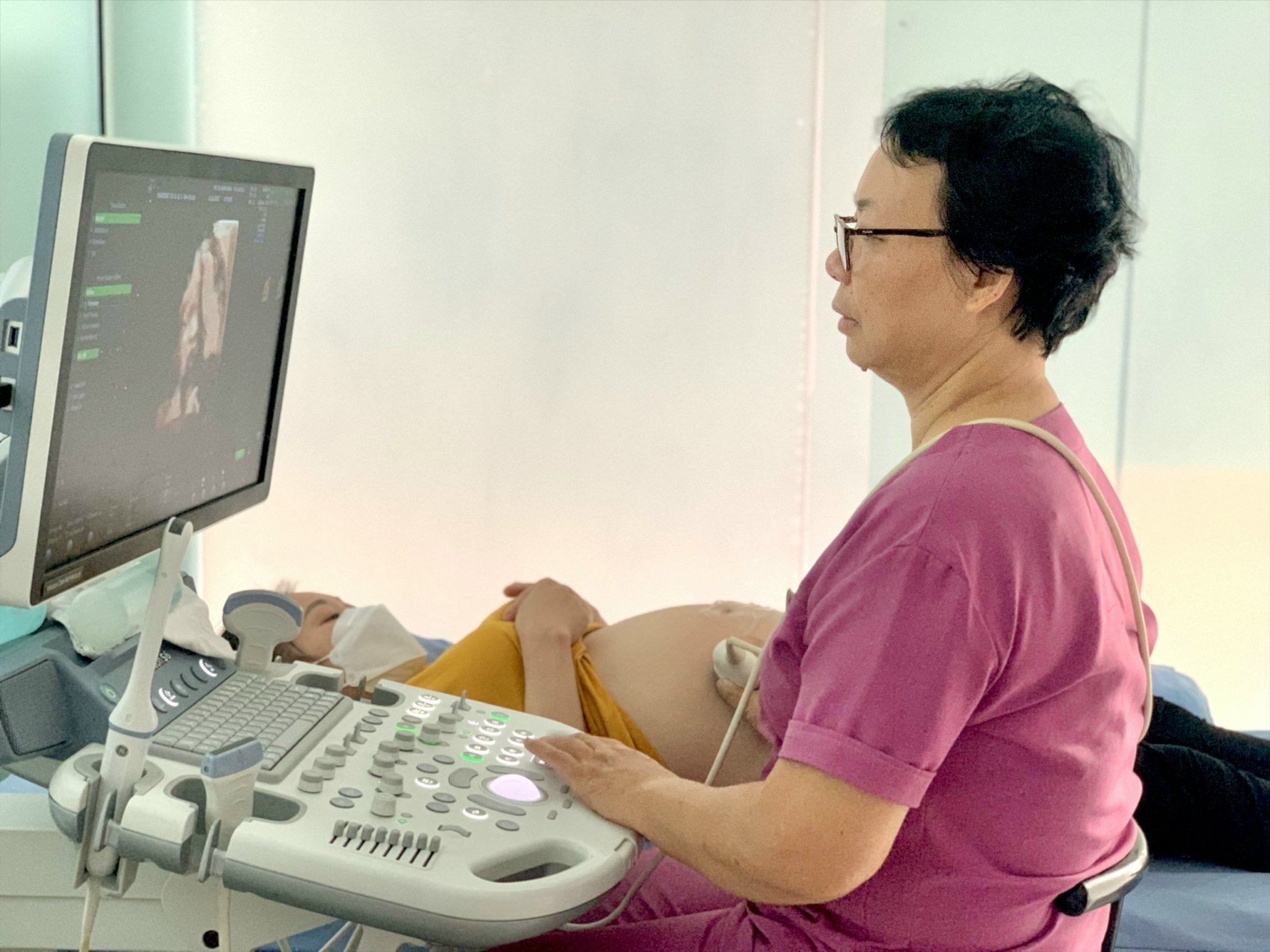
Transvaginal ultrasound helps detect endometriomas (chocolate cysts) with characteristic images: cysts with uniform thick internal echoes, appearing like “ground glass.” However, ultrasound cannot detect superficial peritoneal lesions.
Blood tests
CA-125 marker may be elevated in endometriosis, but it is not specific and cannot be used alone for diagnosis.
MRI
Useful in evaluating deep endometriosis, especially when lesions are in the rectovaginal septum, bladder, or bowel.
Laparoscopy
The gold standard for definitive diagnosis, allowing direct visualization and biopsy of lesions. Treatment (cauterization, excision of lesions) can also be performed during the same procedure.
Treatment methods
Pain management
- Pain medications: NSAIDs (ibuprofen, naproxen) used early before pain becomes severe
- Combine with warm compresses and non-medication measures
Hormonal treatment
Goal: suppress ovulation, reduce estrogen, and shrink endometrial tissue:
- Combined oral contraceptives: Used continuously or cyclically, effectively reduces pain
- Progestins: Oral pills, injections (Depo-Provera), or levonorgestrel-containing intrauterine device
- GnRH agonists: Complete ovarian suppression, short-term use of 3-6 months combined with add-back therapy
- Dienogest (Visanne): A progestin specifically for endometriosis, can be used long-term
Surgery
- Conservative laparoscopy: Cauterize or excise endometrial lesions, remove chocolate cysts, release adhesions. Preferred for women who still wish to conceive.
- Hysterectomy with bilateral salpingo-oophorectomy: Definitive approach for women who no longer wish to conceive, with severe disease unresponsive to medical treatment.
Assisted reproduction
For women with endometriosis who want to become pregnant:
- Conservative surgery can improve natural conception rates
- IUI (intrauterine insemination) for mild endometriosis
- IVF for severe cases or when other methods have failed
Staging of Endometriosis
Endometriosis is classified into 4 stages according to the rASRM (revised American Society for Reproductive Medicine) classification:
| Stage | Description | Characteristics |
|---|---|---|
| I (Minimal) | Few superficial lesions | Small, superficial endometrial implants on the peritoneum |
| II (Mild) | More superficial lesions | More superficial implants, possible mild adhesions |
| III (Moderate) | Chocolate cysts, adhesions | Ovarian endometriomas, pelvic adhesions |
| IV (Severe) | Large cysts, extensive adhesions | Large chocolate cysts, extensive adhesions, deep lesions |
Important note: disease stage does not correlate with pain level. Some women with stage I may have severe pain, while stage IV may have few symptoms. Disease stage primarily relates to the impact on fertility.
Diet and Lifestyle for Endometriosis Patients
Anti-inflammatory diet
Endometriosis is closely linked to chronic inflammation. An anti-inflammatory diet can help reduce symptoms:
Foods to increase:
- Fatty fish rich in omega-3: Salmon, mackerel, herring — 2-3 times/week
- Dark green vegetables: Spinach, kale, broccoli — rich in antioxidants
- Fruits high in vitamin C: Oranges, kiwi, guava, strawberries
- Turmeric (curcumin): Powerful natural anti-inflammatory
- Ginger: Reduces inflammation and pain
- Whole grains: Oats, brown rice, quinoa
- Nuts and seeds: Almonds, chia seeds, flaxseeds — rich in plant-based omega-3
Foods to limit:
- Red meat: Increases estrogen and inflammatory prostaglandin levels
- Processed foods: High in additives, sugar, trans fats
- Refined sugar: Causes inflammation and blood sugar fluctuations
- Caffeine: Increases estrogen, may worsen symptoms
- Alcohol: Increases estrogen, causes inflammation
- Full-fat dairy products: Some studies suggest a link to increased inflammation (still debated)
Exercise
Regular exercise helps:
- Reduce estrogen levels in the body
- Release endorphins — natural pain relief
- Reduce inflammation
- Improve mood and sleep
Aim for 30-45 minutes/day, 5 days/week with suitable activities: brisk walking, swimming, yoga, cycling. Avoid intense exercise during menstruation if pain is severe.
Prevention and Long-Term Management
Endometriosis cannot be completely prevented, but:
- Seek medical attention early when experiencing abnormal menstrual pain, don’t suffer in silence
- Maintain hormonal treatment after surgery to reduce recurrence (recurrence rate is 40-50% within 5 years without maintenance medication)
- Regular exercise helps reduce estrogen levels
- Anti-inflammatory diet: plenty of omega-3, green vegetables, fruits
- Regular monitoring every 6 months with ultrasound and symptom evaluation
When Should You See a Doctor?
You should see a doctor immediately if:
- Menstrual cramps are getting worse, not relieved by common pain medications
- Pain during sexual intercourse (deep pain, not superficial)
- Pain during urination or bowel movements during menstruation
- Difficulty conceiving after 12 months of trying (6 months if over 35)
- Chronic pelvic pain outside menstruation
- Abnormally heavy periods, lasting more than 7 days
- Symptoms seriously affecting work and daily life
Related Articles
- Severe menstrual cramps: When is it a disease? — Distinguishing normal and pathological menstrual pain
- Uterine fibroids — A condition that needs to be differentiated from endometriosis
- Infertility consultation — When endometriosis causes infertility
- Gynecological treatment services — Diagnosis and treatment of endometriosis
At Phong Kham Bac Sy Lam, BSCKI. Tran Thi Thuy Lam, with over 30 years of experience, formerly working at the National Cancer Institute, Hanoi Medical University Hospital, Hanoi Andrology Hospital, and Medlatec Hospital, combines extensive clinical experience and modern ultrasound equipment for early diagnosis of endometriosis, developing personalized treatment plans to control pain and preserve fertility.
Book an Appointment
If you are suffering from severe menstrual cramps or suspect endometriosis, contact us immediately for early diagnosis and treatment.
Phong Kham San Phu Khoa Bac Sy Lam
- Address: 125 Ham Nghi, Kim Tan, Lao Cai
- Phone: 0986 321 000
- Working hours: Monday – Saturday
Book now: 0986 321 000 — 125 Ham Nghi, Kim Tan, Lao Cai