What Are Ovarian Cysts?
Ovarian cysts are fluid-filled sacs that form on or inside the ovaries. This is one of the most common gynecological conditions in women of reproductive age, with a prevalence of approximately 7-10% of the female population. Most ovarian cysts are benign, but if not detected and monitored in time, some cases can lead to serious complications.
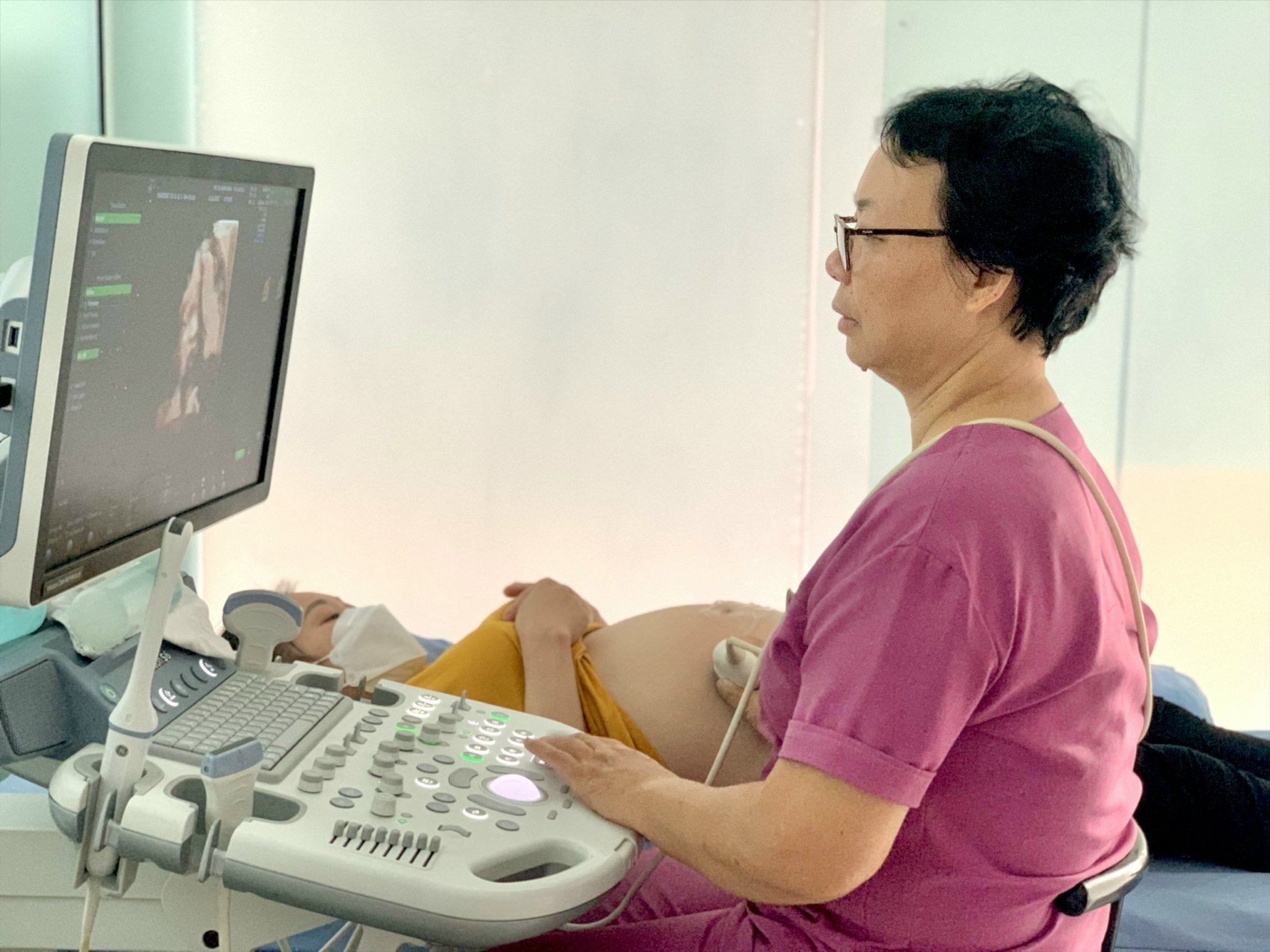
At Phong Kham San Phu Khoa Bac Sy Lam, we regularly treat ovarian cyst cases ranging from early-stage to complex. With modern ultrasound equipment and over 30 years of clinical experience, BSCKI. Tran Thi Thuy Lam will help you better understand this condition.
Common Types of Ovarian Cysts
Functional cysts
These are the most common type, accounting for approximately 70-80% of cases. Functional cysts form during the natural ovulation process and usually resolve on their own after 1-3 menstrual cycles. They include:
- Follicular cysts: Form when the follicle fails to rupture and release the egg, continuing to grow into a fluid-filled sac.
- Corpus luteum cysts: Appear after ovulation when the follicle accumulates fluid and blood inside instead of degenerating normally.
Organic cysts
These cysts are unrelated to the menstrual cycle and usually require medical intervention:
- Dermoid cysts (teratomas): Contain tissues such as hair, skin, fat, and even teeth. Usually benign but do not resolve spontaneously.
- Endometriomas (chocolate cysts): Related to endometriosis, containing old dark brown blood.
- Serous and mucinous cystadenomas: Can grow very large and need close monitoring due to potential for malignant transformation.
Recognizing Ovarian Cyst Symptoms
Many women have ovarian cysts without any clear symptoms, only discovering them incidentally during routine gynecological exams. However, when cysts grow large or cause complications, symptoms may include:
Common symptoms:
- Dull lower abdominal pain on one or both sides, worsening with vigorous activity
- Feeling of heaviness, bloating, abdominal distension
- Menstrual irregularities: irregular periods, delayed periods, or heavy bleeding
- Pain during sexual intercourse
- Frequent urination due to bladder compression
Emergency symptoms:
- Sudden, severe abdominal pain (possibly from torsion or rupture)
- Fever with abdominal pain
- Dizziness, fainting
- Abnormal vaginal bleeding
Causes and Risk Factors
The exact cause of ovarian cysts has not been fully determined, but risk factors include:
- Hormonal imbalance: Disrupted estrogen and progesterone balance
- Endometriosis: Increased risk of chocolate cysts
- Pelvic infections: Can spread to ovaries and form cysts
- History of cysts: Women who have had cysts have a higher recurrence risk
- Ovulation-stimulating medications: Increase risk of functional cyst formation
- Smoking and obesity: Disrupt hormonal balance, increase disease risk
Diagnostic Methods
At Phong Kham Bac Sy Lam, the ovarian cyst diagnostic process includes:
- Clinical examination: Medical history, gynecological exam to assess mass size and location.
- Transvaginal ultrasound: The most accurate method to determine cyst size, structure, and characteristics (clear fluid, thick fluid, mixed).
- Blood tests: CA-125, HE4, AFP to assess malignancy risk. Beta-hCG to rule out ectopic pregnancy.
- Doppler ultrasound: Evaluates blood vessels feeding the cyst, helps differentiate benign from malignant.
Treatment Methods
Watch and wait
Applied for small functional cysts under 5 cm in women of reproductive age. Follow-up ultrasound after 6-8 weeks to assess resolution.
Medical treatment
- Combined oral contraceptives help prevent formation of new cysts
- Pain relievers and anti-inflammatory medications when cysts cause symptoms
- Hormonal treatment for endometriomas
Surgery
Surgery is indicated when cysts are large, don’t resolve, are suspected malignant, or cause complications. Laparoscopic surgery is preferred as it is minimally invasive, allows faster recovery, and maximally preserves healthy ovarian tissue.
Preventing Ovarian Cysts
While complete prevention is not possible, women can reduce their risk by:
- Regular gynecological checkups every 6 months with ultrasound
- Maintaining a healthy weight and balanced diet
- Managing stress effectively to stabilize hormones
- Regular exercise 30 minutes/day
- Not self-medicating with hormones or ovulation stimulants
When Should You See a Doctor?
You should see a doctor immediately if you experience: prolonged lower abdominal pain, menstrual irregularities, pain during intercourse, or can feel a mass in the lower abdomen. Especially, women over 40 who are found to have ovarian cysts need thorough evaluation to rule out malignancy.
Dangerous Complications of Ovarian Cysts
Ovarian torsion
Ovarian torsion occurs when a cyst causes the ovary to rotate around its vascular axis, cutting off blood supply. This is a gynecological emergency requiring immediate surgery:
- Symptoms: Sudden severe one-sided abdominal pain, nausea, vomiting, fever
- Risk factors: Cysts 5-10 cm in size, vigorous physical activity, pregnancy
- Management: Emergency laparoscopy — detorsion if the ovary is still viable, oophorectomy if necrotic
- Golden window: Surgery needed within 6-8 hours to save the ovary
Cyst rupture
Cysts can rupture from trauma, sexual intercourse, or spontaneously when too large:
- Symptoms: Sudden severe abdominal pain, possibly with dizziness, fainting (if significant bleeding)
- Severity: Depends on cyst type and amount of bleeding. Ruptured corpus luteum cysts can cause serious intra-abdominal hemorrhage
- Management: Mild cases may be observed conservatively; severe cases require emergency surgery to stop bleeding
Malignant transformation
Although rare, some ovarian cysts can become malignant, especially:
- Large serous and mucinous cystadenomas
- Cysts in postmenopausal women
- Cysts with solid components, thick walls, multiple septations on ultrasound
- Elevated CA-125 levels
Therefore, all ovarian cysts need regular monitoring with ultrasound and blood tests to detect early signs of abnormality.
Ovarian Cysts and Pregnancy
Approximately 1-2% of pregnant women are found to have ovarian cysts via prenatal ultrasound. Most are corpus luteum cysts — necessary for maintaining pregnancy in the first trimester, which resolve when the placenta takes over progesterone production.
Managing ovarian cysts during pregnancy requires careful consideration:
- Cysts under 5 cm, asymptomatic: Regular ultrasound monitoring
- Cysts 5-10 cm: Close monitoring, consider surgery if torsion or malignancy suspected
- Surgery (if needed): Best performed in the second trimester (weeks 14-22) when miscarriage risk is lowest
- Endometriomas: Often improve during pregnancy due to high progesterone levels
Differentiating Ovarian Cysts from Other Conditions
Ovarian cyst symptoms can be confused with many other conditions:
- Ectopic pregnancy: One-sided abdominal pain + missed period + positive beta-hCG
- Polycystic ovary syndrome (PCOS): Multiple small follicles (under 10 mm), menstrual irregularity, elevated androgens
- Appendicitis: Right lower quadrant pain, fever, elevated white blood cells
- Uterine fibroids: Enlarged uterus, heavy periods, palpable lower abdominal mass
Differential diagnosis requires combining clinical examination, ultrasound, blood tests, and sometimes MRI.
When Should You See a Doctor?
You should visit a gynecologist immediately when experiencing:
- Prolonged or sudden severe lower abdominal pain
- Menstrual irregularities: irregular, delayed, or heavy periods
- Pain during sexual intercourse
- Feeling of heaviness or bloating in the lower abdomen
- Abnormally frequent urination
- Palpable mass in the lower abdomen
- Women over 40 found to have ovarian cysts — need cancer screening to rule out malignancy
Related Articles
- Polycystic ovary syndrome (PCOS): Causes and treatment — Differentiating ovarian cysts from PCOS
- Uterine fibroids: Symptoms and treatment — Another common gynecological condition in women
- Ectopic pregnancy: Signs and management — Needs differentiation from ruptured or torsioned ovarian cysts
With over 30 years of experience in obstetrics and gynecology, BSCKI. Tran Thi Thuy Lam accompanies women in Lao Cai in diagnosing, treating, and monitoring ovarian cysts effectively and safely.
Book an Appointment
Contact us today for ovarian cyst consultation and screening:
- Hotline: 0986 321 000
- Address: 125 Ham Nghi, Kim Tan, Lao Cai
- Services: Gynecological exam | Cancer screening