What is an ectopic pregnancy?
An ectopic pregnancy is a condition where the embryo implants and develops outside the uterine cavity, most commonly in the fallopian tube (accounting for approximately 95% of cases). The embryo may also implant in the ovary, abdominal cavity, or cervix, though these are less common.
This is a serious obstetric emergency. In Vietnam, ectopic pregnancies account for approximately 1-2% of all pregnancies and represent one of the leading causes of maternal death in the first trimester if not diagnosed and treated promptly.
Causes of ectopic pregnancy
Pelvic infections
Genital tract infections, particularly those caused by Chlamydia and gonorrhea, cause inflammation and damage to the fallopian tube lining. The cilia within the tubes are destroyed, preventing the fertilized egg from traveling to the uterus, leading to implantation within the fallopian tube itself.
History of pelvic surgery
Previous surgeries such as appendectomy, ovarian cyst removal, or fallopian tube surgery can create adhesions, narrowing, or deformity of the fallopian tubes, obstructing embryo movement.
Other risk factors
- History of previous ectopic pregnancy (10-15% recurrence risk)
- Use of an intrauterine device (IUD) that failed to prevent pregnancy
- Assisted reproduction (IVF) also carries a certain risk
- Smoking reduces fallopian tube motility
- Endometriosis
- Age over 35
Signs of ectopic pregnancy
Early stage (4-6 weeks)
In the early stage, symptoms may be subtle and easily confused with a normal pregnancy or threatened miscarriage:
- Missed period with a positive pregnancy test
- Lower abdominal pain, dull and often on one side
- Abnormal vaginal bleeding, scant, dark brown or dark red
- Beta-hCG levels rising slower than normal (normally doubles every 48 hours)
Late stage — when ruptured
When the ectopic pregnancy grows and causes fallopian tube rupture, symptoms become acute and dangerous:
- Severe, sudden abdominal pain radiating throughout the abdomen
- Internal bleeding causing dizziness and fainting
- Dropping blood pressure, rapid pulse, pale skin
- Shoulder pain (caused by blood irritating the diaphragm — a characteristic sign)
If these symptoms occur, seek emergency medical care immediately.
Diagnosing ectopic pregnancy
Transvaginal ultrasound
This is the most important diagnostic method. Ultrasound helps determine:
- An empty uterine cavity (no gestational sac in the uterus)
- An abnormal mass adjacent to the uterus
- Free fluid in the abdomen (if ruptured)
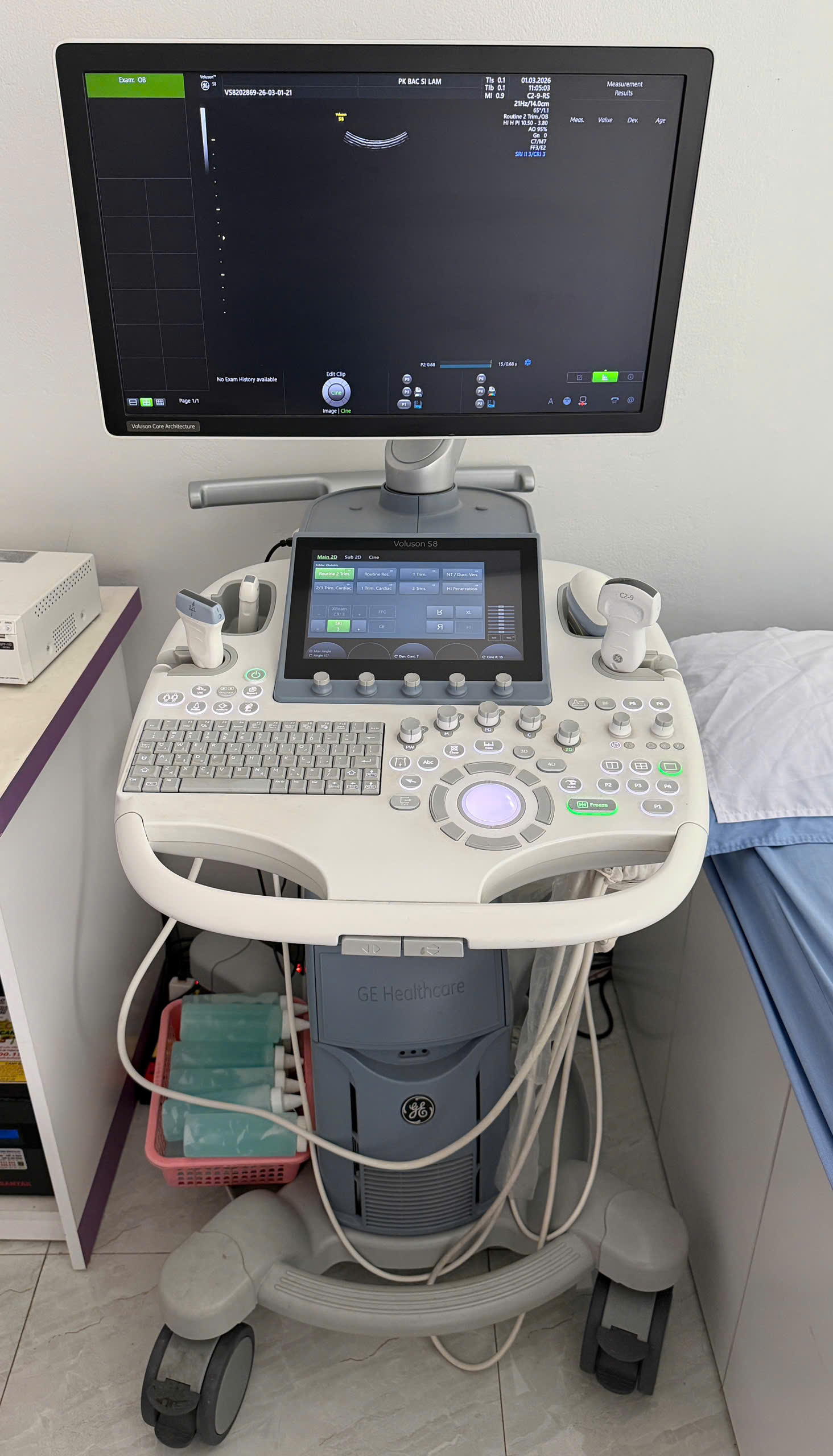
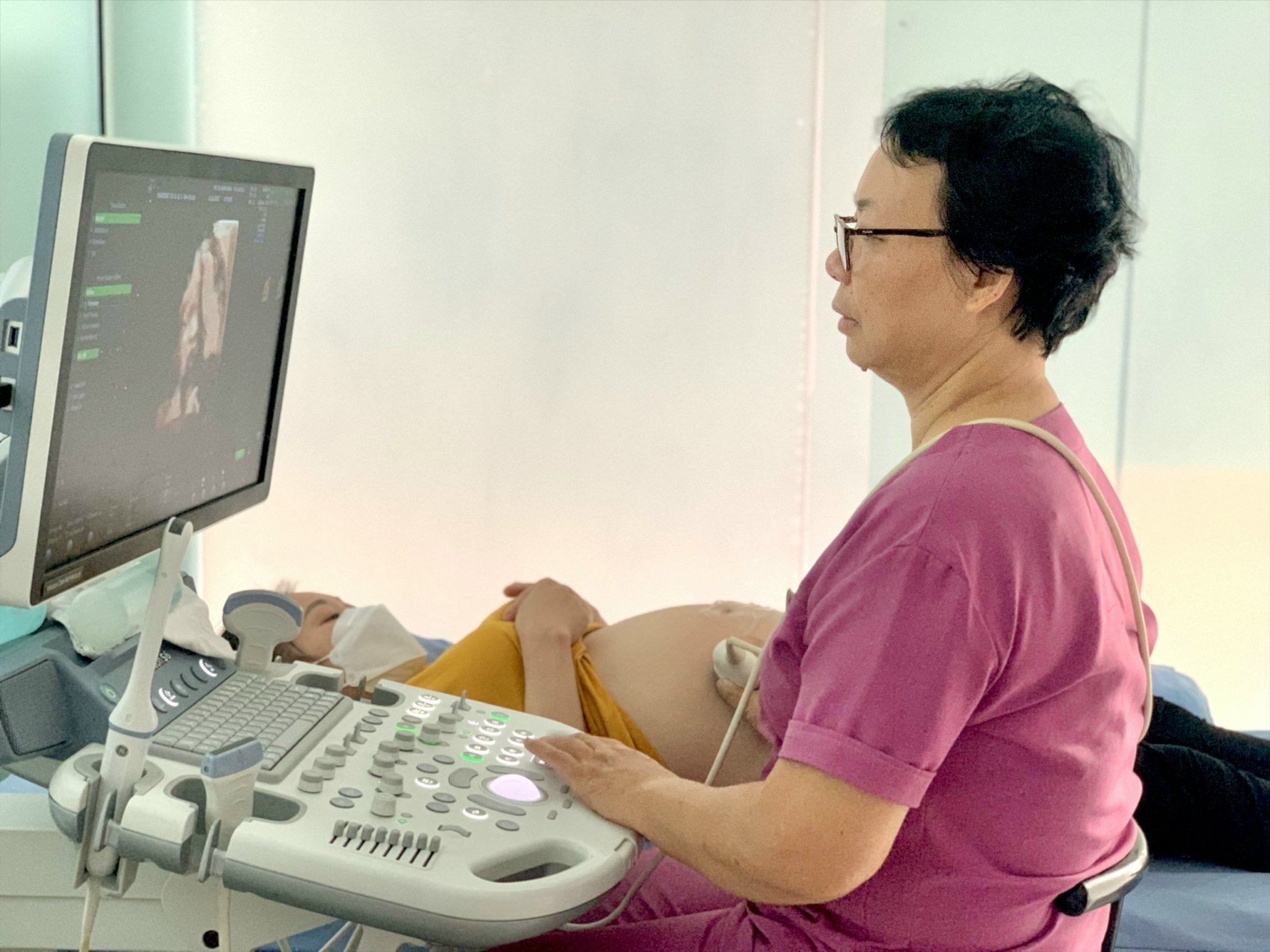
At Phòng Khám Bác Sỹ Lâm, we use a modern ultrasound system with specialized probes that allow detection of ectopic pregnancy from a very early stage.
Beta-hCG testing
Serial beta-hCG measurements every 48 hours help assess the trend. If beta-hCG exceeds 1,500 mIU/mL but no gestational sac is seen in the uterus on ultrasound, ectopic pregnancy is highly suspected.
Laparoscopy
In difficult diagnostic cases, laparoscopy both helps confirm the diagnosis and can provide treatment in the same procedure.
Treatment methods
Medical treatment with Methotrexate
Applied when detected early, the ectopic mass is small (under 3.5 cm), not ruptured, beta-hCG is below 5,000 mIU/mL, and the patient is stable:
- Methotrexate injection following single or multi-dose protocols
- Serial beta-hCG monitoring until levels return to negative
- Advantage: preserves the fallopian tube, no surgery needed
Laparoscopic surgery
The most common method when the ectopic mass is large or has ruptured:
- Conservative surgery (opening the tube to remove the ectopic mass): preserves the fallopian tube
- Salpingectomy: removal of the tube when it is severely damaged
Emergency open surgery
Indicated when the patient is in hemorrhagic shock, hemodynamically unstable, requiring urgent life-saving intervention.
Preventing ectopic pregnancy
Complete prevention is not possible, but risk can be reduced by:
- Thoroughly treating genital tract infections
- Regular gynecological check-ups for early detection of infections
- Quitting smoking as it significantly increases risk
- Early ultrasound when you know you are pregnant (weeks 5-6) to confirm pregnancy location
- Close monitoring if you have a history of previous ectopic pregnancy
After ectopic pregnancy treatment
After treatment, women need follow-up and psychological support:
- Monitor beta-hCG until completely negative
- Wait 3-6 months before trying to conceive again (depending on treatment method)
- Check fallopian tube patency before planning pregnancy
- When pregnant again, get an early ultrasound to confirm pregnancy location
When to see a doctor
Seek medical attention immediately when you experience:
- A missed period with one-sided lower abdominal pain
- Abnormal vaginal bleeding after a missed period
- A positive pregnancy test with significant abdominal pain
- A history of ectopic pregnancy and suspected new pregnancy
Psychological Impact and Support After Ectopic Pregnancy
An ectopic pregnancy affects not only the physical body but also causes significant psychological trauma. Pregnancy loss at any stage is a major loss, and many women experience grief, anxiety, and even self-blame.
Common emotions
- Grief and loss: Even though the pregnancy was early, the feeling of losing a child is very real and needs to be respected
- Worry about the future: Fear of not being able to conceive again or fear of recurrence in the next pregnancy
- Self-blame: Many women wonder what they did wrong — but in reality, an ectopic pregnancy is not anyone’s fault
- Depression: Some women may develop depression after pregnancy loss
Psychological support advice
- Allow yourself to grieve — don’t hide your emotions
- Share with your partner, trusted family members, or friends
- Seek professional help if grief persists beyond 2-3 months
- Remember that most women after an ectopic pregnancy can still conceive and have healthy babies
Ectopic Pregnancy and Fertility After Treatment
One of the biggest concerns after an ectopic pregnancy is future fertility. Here is important information:
- If both fallopian tubes remain: Natural conception rate afterward is approximately 60-70%
- If one tube is removed: Conception rate decreases to approximately 40-50%, but is still entirely possible
- If both tubes are removed: Assisted reproduction through IVF is needed
- Methotrexate treatment: Usually preserves the fallopian tube, resulting in better fertility outcomes
Most importantly, check fallopian tube patency before planning another pregnancy, and when pregnant, get an early ultrasound from weeks 5-6 to confirm pregnancy location.
Differentiating Ectopic Pregnancy from Other Conditions
Ectopic pregnancy symptoms can resemble many other conditions, making diagnosis challenging:
| Symptom | Ectopic Pregnancy | Threatened Miscarriage | Appendicitis | Ovarian Cyst Torsion |
|---|---|---|---|---|
| Pain | One-sided, progressive | Central lower abdomen | Right side, McBurney’s point | One-sided, sudden |
| Bleeding | Scant, dark | Bright red, heavy | None | None or minimal |
| Beta-hCG | Rising slowly | Rising normally or declining | Negative | Negative |
| Fever | No (unless infected) | No | Yes | Possible |
This comparison table is for reference only. Accurate diagnosis requires combining clinical examination, ultrasound, and blood tests by a specialist.
When to See a Doctor
Seek medical attention immediately when you experience:
- A missed period with one-sided lower abdominal pain
- Abnormal vaginal bleeding after a missed period
- A positive pregnancy test with significant abdominal pain
- A history of ectopic pregnancy and suspected new pregnancy
- Dizziness or fainting with abdominal pain (emergency — go to the hospital immediately)
If you have a history of pelvic infections, abdominal surgery, or other risk factors, proactively seek gynecological care and an early ultrasound as soon as you know you are pregnant.
Related Articles
- Ovarian Cysts: Symptoms and Treatment — A gynecological condition to differentiate from ectopic pregnancy
- Sexually Transmitted Diseases Women Should Know — Chlamydia and gonorrhea are leading causes of ectopic pregnancy
- Early Signs of Pregnancy — Recognizing early signs for timely ultrasound confirmation of pregnancy location
With over 30 years of experience in obstetrics and gynecology, BSCKI. Trần Thị Thúy Lâm and the medical team at the clinic are always ready to support early diagnosis and timely management of ectopic pregnancies, helping protect the health and fertility of women.
Book an Appointment
Contact us now for early consultation and diagnosis:
- Hotline: 0986 321 000
- Address: 125 Hàm Nghi, Kim Tân, Lào Cai
- Services: Gynecological Care | Obstetric Ultrasound