What are uterine fibroids?
Uterine fibroids (also called leiomyomas or myomas) are benign tumors that develop from the smooth muscle layer of the uterus. They are the most common gynecological tumors in women of reproductive age, affecting approximately 20-40% of women aged 30-50.
Fibroids may appear as a single growth or multiple at once, ranging in size from a few millimeters to tens of centimeters. Most fibroids do not cause symptoms and are discovered incidentally during routine gynecological exams.
Classification by location
Subserosal fibroids
Grow on the outer surface of the uterus, projecting toward the abdominal cavity. These usually cause less menstrual bleeding but when large can compress adjacent organs like the bladder and rectum.
Intramural fibroids
Grow within the uterine muscle wall — the most common type (70%). When large, they can distort the uterine cavity, causing heavy bleeding and pain.
Submucosal fibroids
Grow toward the uterine cavity — the least common but most symptomatic type. These have the greatest impact on fertility and cause the heaviest bleeding.
Causes and risk factors
Role of hormones
Estrogen and progesterone play important roles in fibroid growth. Fibroids have more estrogen receptors than normal uterine muscle, so they grow vigorously during reproductive years and shrink after menopause.
Genetic factors
Women whose mothers or sisters have fibroids are 2-3 times more likely to develop them. Research has identified multiple genetic variants associated with fibroid development.
Other risk factors
- Age: Most common in women 30-50 years old
- Never having been pregnant: Higher risk in nulliparous women
- Obesity: Increased risk because fat tissue produces additional estrogen
- Early puberty: Earlier and longer estrogen exposure
- Diet: High in red meat, low in green vegetables
Symptoms
Approximately 50% of women with fibroids have no symptoms. When symptoms occur, their severity depends on the number, size, and location:
Menstrual changes
- Heavy periods: Lasting longer than 7 days
- Prolonged bleeding: Bleeding outside the menstrual cycle
- Large blood clots during menstruation
- Anemia from chronic blood loss (fatigue, pale skin, shortness of breath)
Pain and compression
- Lower abdominal or lower back pain, dull and persistent
- Pain during intercourse (dyspareunia)
- Frequent urination from fibroid compression on the bladder
- Constipation from fibroid compression on the rectum
- Abnormally enlarged abdomen with large fibroids
Effects on fertility
- Difficulty conceiving or infertility
- Recurrent miscarriage
- Preterm birth or abnormal fetal position
- Pregnancy complications
Diagnostic methods
Clinical examination
The doctor may find the uterus larger than normal with an irregular surface during pelvic examination. However, small fibroids may not be palpable.
Ultrasound
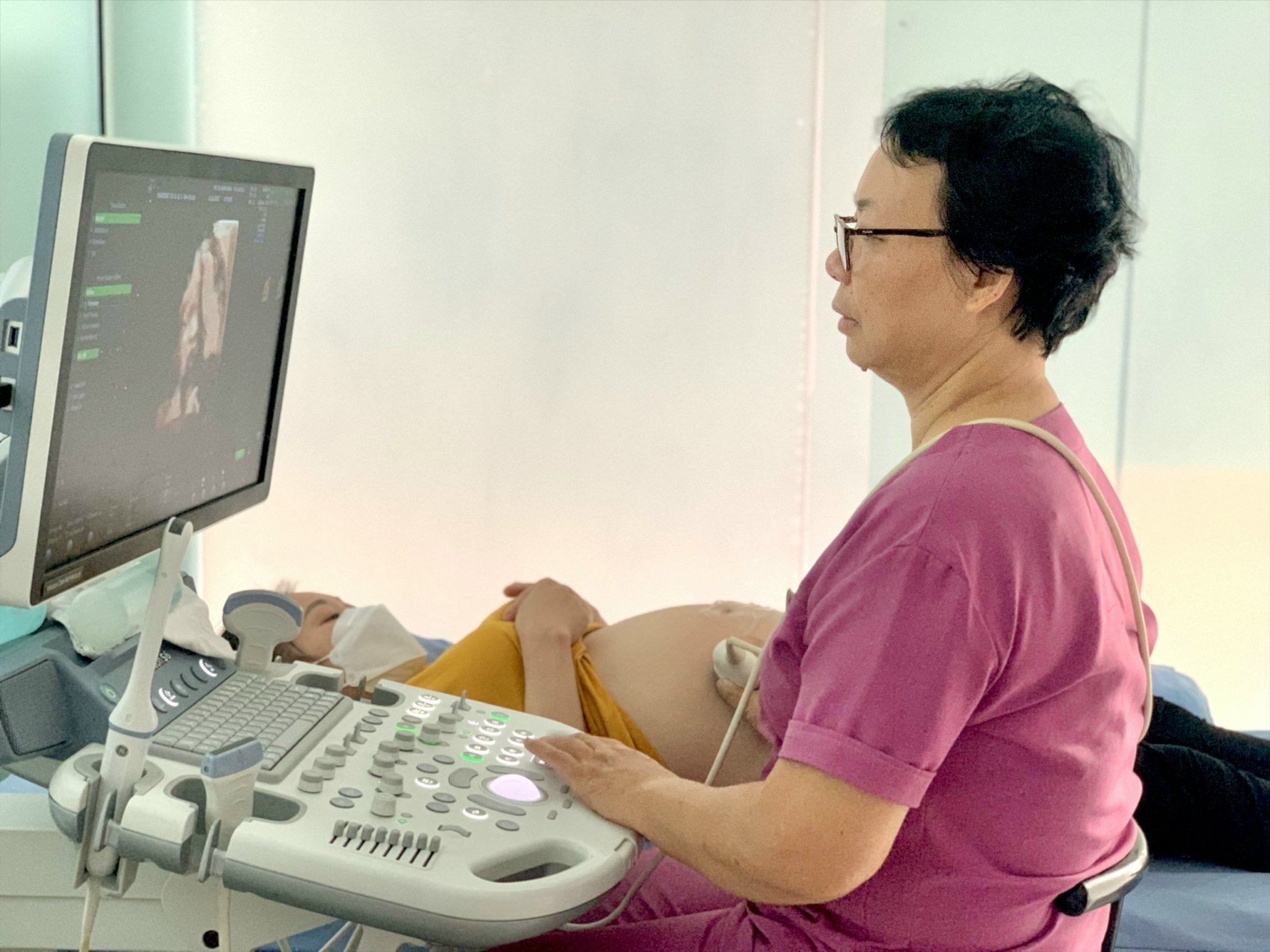
The first-line diagnostic method, helping identify fibroid number, size, and location. Transvaginal ultrasound provides more detailed images than abdominal ultrasound.
Additional methods
- Saline infusion sonography: Evaluates submucosal fibroids
- MRI: For detailed assessment before surgery
- Hysteroscopy: Direct visualization of fibroids within the uterine cavity
Treatment methods
Regular monitoring
For small, asymptomatic fibroids. Ultrasound check-ups every 6-12 months to monitor size.
Medical treatment
- Anti-bleeding medications: Tranexamic acid reduces menstrual blood loss
- Hormonal contraceptives: Control menstrual cycles, reduce heavy bleeding
- Levonorgestrel-releasing IUD: Effectively reduces bleeding
- GnRH agonists: Shrink fibroids before surgery
- Newer medications: Ulipristal acetate, Relugolix with add-back therapy
Conservative surgery — Myomectomy
Removes fibroids while preserving the uterus, suitable for women who still wish to have children:
- Laparoscopy: For subserosal or intramural fibroids
- Hysteroscopy: For submucosal fibroids
- Open surgery: For very large fibroids or multiple growths
Hysterectomy
The definitive treatment for women who no longer wish to have children and have severely symptomatic fibroids. Can be performed via laparoscopy, vaginal approach, or open surgery.
Minimally invasive methods
- Uterine artery embolization: Cuts off the blood supply feeding the fibroids
- MRI-guided focused ultrasound (MRgFUS)
- Radiofrequency ablation
Fibroids and pregnancy
Many women with fibroids can conceive and deliver normally. However, close monitoring is needed because fibroids may:
- Grow rapidly during pregnancy due to increased hormones
- Cause pain from degeneration (red degeneration)
- Increase the risk of placenta previa and placental abruption
- Increase the likelihood of C-section delivery
Prevention and monitoring
Complete prevention of uterine fibroids is not possible, but maintaining a healthy lifestyle helps reduce risk:
- Maintain a healthy weight
- Eat plenty of green vegetables and fruits, limit red meat
- Exercise regularly
- Have gynecological check-ups every 6-12 months
When to Be Concerned About Fibroids
Although most uterine fibroids are benign, some signs warrant thorough evaluation:
Signs requiring close monitoring
- Rapid growth: Significant size increase in a short period (especially after menopause)
- Worsening symptoms: Increasingly heavy periods, more pain, anemia not responding to treatment
- Fibroids not shrinking after menopause: Normally fibroids shrink after menopause; if they don’t or continue growing, sarcoma (uterine smooth muscle cancer — very rare, under 0.1%) should be ruled out
When is emergency surgery needed?
- Fibroids causing severe anemia (hemoglobin below 7g/dL) not responding to medical treatment
- Pedunculated submucosal fibroid with torsion — causing severe pain
- Red degeneration during pregnancy — uncontrollable pain
- Suspected malignancy based on imaging and clinical findings
Fibroids and Pregnancy — More Detail
Women with fibroids who wish to become pregnant need thorough evaluation before conception:
Before pregnancy
- Ultrasound to assess fibroid number, size, and location
- If submucosal fibroids distort the uterine cavity: myomectomy before pregnancy is recommended
- Wait 3-6 months after myomectomy before conceiving to allow uterine recovery
During pregnancy
Fibroids can cause multiple complications requiring close monitoring:
- Red degeneration: Occurs when fibroids outgrow their blood supply, causing severe pain and fever. Most common in the second trimester. Conservative management: rest, pain relief, IV fluids
- Placenta previa: Fibroids in the lower uterine segment may obstruct placental positioning
- Abnormal fetal presentation: Large fibroids may prevent the baby from turning head-down
- Preterm labor: Large fibroids may stimulate early uterine contractions
- Need for C-section: Higher C-section rate, especially if fibroids in the lower segment block the birth canal
After delivery
- Fibroids may shrink as hormones return to normal
- Slightly increased risk of postpartum hemorrhage
- Close monitoring of uterine involution and postpartum blood loss needed
Living with Fibroids
Many women with small, asymptomatic fibroids can live normally without intervention. Some helpful tips:
Supportive diet
- Eat plenty of green vegetables and fruits: Fiber helps the body eliminate excess estrogen
- Limit red meat: Research shows high red meat consumption increases fibroid risk
- Supplement vitamin D: Vitamin D deficiency is linked to increased fibroid risk
- Limit alcohol: Alcohol increases estrogen levels
- Green tea: Contains EGCG; some research shows it may help suppress fibroid growth
Stress management
Chronic stress disrupts hormones and may promote fibroid growth. Effective stress management includes yoga, meditation, regular exercise, and adequate sleep.
Regular check-ups
Ultrasound monitoring every 6-12 months helps detect early changes in fibroid size and characteristics, allowing timely intervention when needed.
When to See a Doctor
Women should seek gynecological care when:
- Abnormally heavy periods lasting more than 7 days
- Persistent lower abdominal or back pain
- Pain during intercourse
- Frequent urination or constipation from compression
- Abnormally enlarged abdomen
- Difficulty conceiving after 6-12 months of trying
- Previously diagnosed with fibroids and due for follow-up
- Postmenopausal women with growing or new fibroids — need cancer screening
Related Articles
- Ovarian Cysts: Symptoms and Treatment — Another common gynecological condition to differentiate
- Polycystic Ovary Syndrome (PCOS) — Hormonal disorder affecting fertility
- C-Section vs. Vaginal Birth — Uterine fibroids may affect delivery method
At Phòng Khám Bác Sỹ Lâm, with modern ultrasound equipment and over 30 years of experience, BSCKI. Trần Thị Thúy Lâm will recommend the most appropriate treatment for each case of uterine fibroids, prioritizing uterine preservation for women who still wish to have children.
Book an Appointment
Contact us now for consultation and treatment of uterine fibroids:
- Hotline: 0986 321 000
- Address: 125 Hàm Nghi, Kim Tân, Lào Cai
- Services: Gynecological Care | Cancer Screening