What Is Prenatal Screening?
Prenatal screening consists of tests that assess the risk of the fetus having chromosomal abnormalities (Down syndrome, Edwards syndrome, Patau syndrome) and birth defects. This is a screening step, not a definitive diagnosis — it helps identify which expectant mothers need further specialized testing.
Key points to understand:
- Screening = assessing risk (high or low probability)
- Diagnosis = confirming whether or not the condition exists (amniocentesis, chorionic villus sampling)
- Screening is safe for the fetus (only a maternal blood draw or ultrasound)
- A high-risk screening result DOES NOT mean your baby has a condition
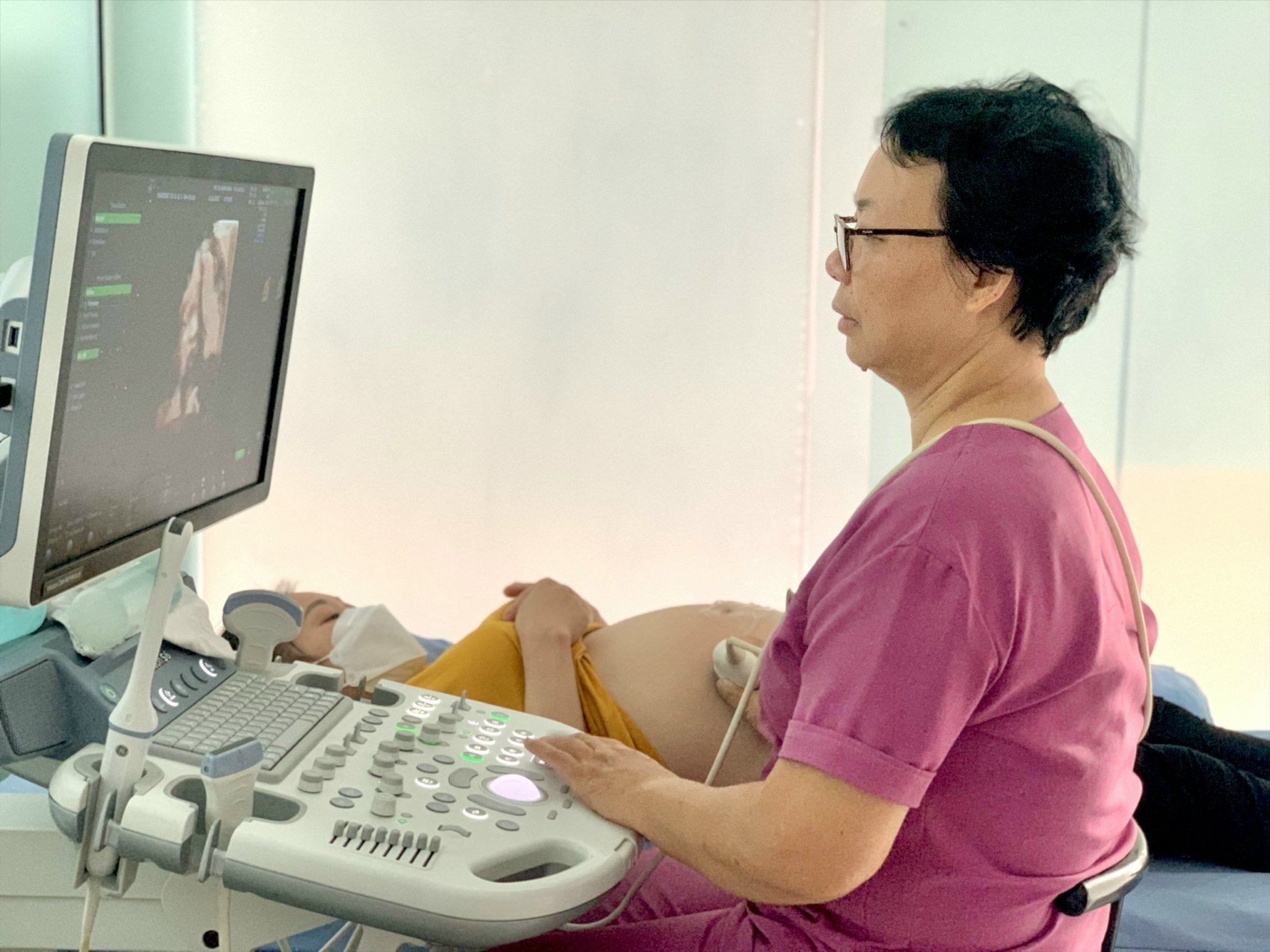
BSCKI. Trần Thị Thúy Lâm, with over 30 years of experience in prenatal care and obstetrics, emphasizes: “Prenatal screening is one of the most important steps during pregnancy. Early risk detection gives families the information and time to prepare as best they can.”
Why Is Prenatal Screening Important?
Common chromosomal abnormalities
| Syndrome | Frequency | Characteristics |
|---|---|---|
| Down (trisomy 21) | 1/700 births | Intellectual disability, heart defects, distinctive facial features |
| Edwards (trisomy 18) | 1/5,000 | Severe multi-organ defects, 90% die within the first year |
| Patau (trisomy 13) | 1/16,000 | Very severe brain, heart, facial defects, poor prognosis |
| Turner (45,X) | 1/2,500 females | Short stature, delayed sexual development, infertility |
| Neural tube defects | 1/1,000 | Spina bifida, anencephaly |
Risk increases with maternal age
| Mother’s Age | Down Syndrome Risk | Chromosomal Abnormality Risk |
|---|---|---|
| 25 | 1/1,250 | 1/476 |
| 30 | 1/952 | 1/385 |
| 35 | 1/385 | 1/192 |
| 38 | 1/175 | 1/102 |
| 40 | 1/106 | 1/66 |
| 45 | 1/30 | 1/21 |
Prenatal Screening Tests
1. Combined Test (First Trimester Screening) — Recommended for ALL expectant mothers
Timing: Weeks 11 — 13 weeks 6 days (CANNOT be done outside this window)
Includes 3 components:
a) Ultrasound measuring nuchal translucency (NT):
- Measures the fluid space at the back of the fetal neck
- Normal: under 2.5 mm
- Increased NT suggests risk of Down syndrome, heart defects, and other chromosomal abnormalities
- Also evaluates: nasal bone (absent nasal bone suggests Down syndrome), ductus venosus, tricuspid valve
b) Maternal blood test (Double test):
- PAPP-A (Pregnancy-Associated Plasma Protein-A): Decreased in Down syndrome
- Free beta-hCG: Increased in Down syndrome, decreased in Edwards syndrome
c) Combined with maternal age:
- Specialized software calculates risk probability based on all 3 factors
Detection rate: Down syndrome 85-90%, Edwards syndrome 90-95%
Cost: 400,000-600,000 VND (not including ultrasound)
2. Triple Test (Second Trimester Screening)
Timing: Weeks 15-20 (best at weeks 16-18)
Includes: Maternal blood test measuring 3 substances:
- AFP (Alpha-fetoprotein): Increased in neural tube defects, decreased in Down syndrome
- hCG (Human Chorionic Gonadotropin): Increased in Down syndrome
- uE3 (Unconjugated Estriol): Decreased in Down syndrome
Detection:
- Down syndrome — accuracy 60-70% (lower than Combined test)
- Neural tube defects (spina bifida, anencephaly) — an advantage the Combined test lacks
Cost: 350,000-500,000 VND
When to use the Triple test?
- Expectant mother missed the Combined test window (after week 14)
- To supplement the Combined test for additional neural tube defect assessment
- Limited budget, unable to afford NIPT
3. NIPT (Non-Invasive Prenatal Testing — Cell-Free DNA Testing)
Timing: From week 10 onward (earliest available test)
Method: Maternal venous blood draw, analyzing cell-free DNA (cfDNA) from the fetus circulating in the mother’s blood. Uses next-generation sequencing technology (NGS).
Detection:
- Down syndrome — over 99% accuracy (best currently available)
- Edwards syndrome — 98%+
- Patau syndrome — 95%+
- Sex chromosome abnormalities (Turner 45,X; Klinefelter 47,XXY)
- Some microdeletion abnormalities (depending on the panel)
- Can determine fetal sex as early as week 10
Cost: 3,000,000-7,000,000 VND (depending on the test panel)
Superior advantages: Highest accuracy, non-invasive, earliest testing available
4. Anomaly Scan (Morphology Ultrasound)
While not a blood test, the anatomy ultrasound at weeks 20-22 is an important part of prenatal screening:
Timing: Weeks 20-22 (optimal)
Detection:
- Structural defects: heart, brain, kidneys, spine, limbs, face
- Cleft palate, cleft lip
- Neural tube defects (spina bifida, anencephaly)
- Amniotic fluid abnormalities
- Comprehensive assessment of fetal development
Cost: 300,000-500,000 VND
Important: The anatomy scan detects approximately 50-70% of fetal structural defects — a complementary test that cannot replace serum screening
Comprehensive Comparison
| Criteria | Combined Test | Triple Test | NIPT |
|---|---|---|---|
| Gestational Week | 11-13+6 | 15-20 | From 10 |
| Accuracy (Down) | 85-90% | 60-70% | 99%+ |
| False Positive Rate | 5% | 5-8% | <1% |
| Cost | 400-600K | 350-500K | 3-7 million |
| Fetal Safety | Safe | Safe | Safe |
| Detects Neural Tube Defects | No | Yes | No (some panels do) |
| Determines Sex | No | No | Yes |
| Results Time | 3-5 days | 3-5 days | 7-14 days |
Understanding Your Screening Results
Low risk result
- Probability < 1/1000 (or < 1/250 depending on the threshold)
- Fetus has very low risk of chromosomal abnormalities
- Continue routine pregnancy monitoring per prenatal schedule
- Still need anatomy ultrasound at weeks 20-22
High risk result
- Probability > 1/250 (or threshold depending on the test)
- IMPORTANT: High risk DOES NOT mean your baby has a condition
- Example: Risk of 1/100 = 99% chance the baby is NORMAL, only 1% chance of the condition
- 95% of cases with high-risk results turn out normal upon diagnostic testing
- Additional diagnostic testing is needed for confirmation
Definitive diagnostic tests (when screening shows high risk)
| Test | Gestational Week | Accuracy | Miscarriage Risk |
|---|---|---|---|
| NIPT (if not already done) | From 10 | 99%+ | None (non-invasive) |
| Amniocentesis | 16-20 | 99.9% | 0.1-0.3% |
| Chorionic Villus Sampling (CVS) | 11-14 | 99.5% | 0.5-1% |
Referral note: Amniocentesis and CVS are typically performed at higher-level hospitals (National OB-GYN Hospital, Hanoi Medical University Hospital). Phòng Khám Bác Sỹ Lâm will directly refer and transfer complete medical records when needed.
Factors Affecting Screening Accuracy
For the most accurate screening results, expectant mothers should note:
- Accurate gestational age: Incorrect dating affects blood test results. Confirm gestational age by ultrasound before screening.
- Maternal weight: Overweight women may have lower blood marker concentrations due to dilution, affecting results.
- Multiple pregnancy: Twins or multiples affect hCG and AFP levels. Inform the testing lab.
- Diabetes: Affects AFP; adjustments are needed in calculations.
- Smoking: Affects some screening markers.
- IVF pregnancy: hCG levels may be higher than normal.
Coping Psychologically with Screening Results
Receiving a high-risk screening result can cause great anxiety and fear for expectant mothers and families. Some advice:
- Take deep breaths, stay calm: Remember that high risk does not mean your baby has a condition. 95% of cases turn out normal upon diagnostic testing.
- Consult your doctor: Let the doctor explain the meaning of the numbers in detail and guide the next steps (NIPT or amniocentesis).
- Don’t obsessively search the internet: Online information may be inaccurate and cause additional worry.
- Share with your partner and family: Emotional support is very important.
- Make decisions with complete information: All decisions should be made after receiving definitive diagnostic results, not based solely on screening.
Recommended Prenatal Screening Schedule
According to Vietnamese Ministry of Health and international health organization guidelines, expectant mothers should follow:
| Gestational Week | Test | Purpose |
|---|---|---|
| 8-10 | Early pregnancy ultrasound | Confirm heartbeat, gestational age, number of fetuses |
| 11-13+6 | Combined test (Double test + NT ultrasound) | Screen for Down, Edwards, Patau syndromes |
| 15-20 | Triple test (if Combined test was missed) | Screen for Down syndrome, neural tube defects |
| 20-22 | Anatomy ultrasound | Detect structural defects |
| 28-32 | Third trimester ultrasound | Assess growth, fetal position |
Who Should Get Screened?
Encouraged for ALL expectant mothers
- Combined test (weeks 11-13) — should be done for every expectant mother regardless of age
- Anatomy ultrasound (weeks 20-22) — should be done for every expectant mother
Especially consider NIPT when
- Mother is over 35 years old — chromosomal abnormality risk increases significantly
- History of child with chromosomal abnormality
- Combined or Triple test result shows high risk
- Ultrasound detects abnormalities (increased NT, absent nasal bone, defects)
- History of recurrent miscarriage
- Family history of genetic abnormalities
Practical advice for expectant mothers
- Don’t panic with a high-risk result — remember that 95% of cases turn out normal upon diagnostic testing
- Don’t skip screening thinking “everything will be fine” — chromosomal abnormalities can occur in any pregnancy, even in young, healthy mothers
- Test on time — the Combined test is ONLY accurate at weeks 11-13+6; later is too late
- Consult your doctor before deciding on invasive diagnostic tests (amniocentesis)
- Combine serum screening with regular prenatal ultrasound
When to See a Doctor
Contact your doctor immediately when:
- You receive a high-risk screening result — need guidance on next steps
- You missed the Combined test window (past week 14) — need an alternative plan
- Ultrasound detects abnormalities (increased NT, structural defects)
- You have a history of children with abnormalities or recurrent miscarriage
- You are worried about test results and need clear explanation
- You are an expectant mother over 35 needing a personalized screening plan
- You have a high-risk pregnancy requiring special monitoring
Prenatal Screening at Phòng Khám Bác Sỹ Lâm
Phòng Khám Sản Phụ Khoa Bác Sỹ Lâm provides comprehensive prenatal care and screening services:
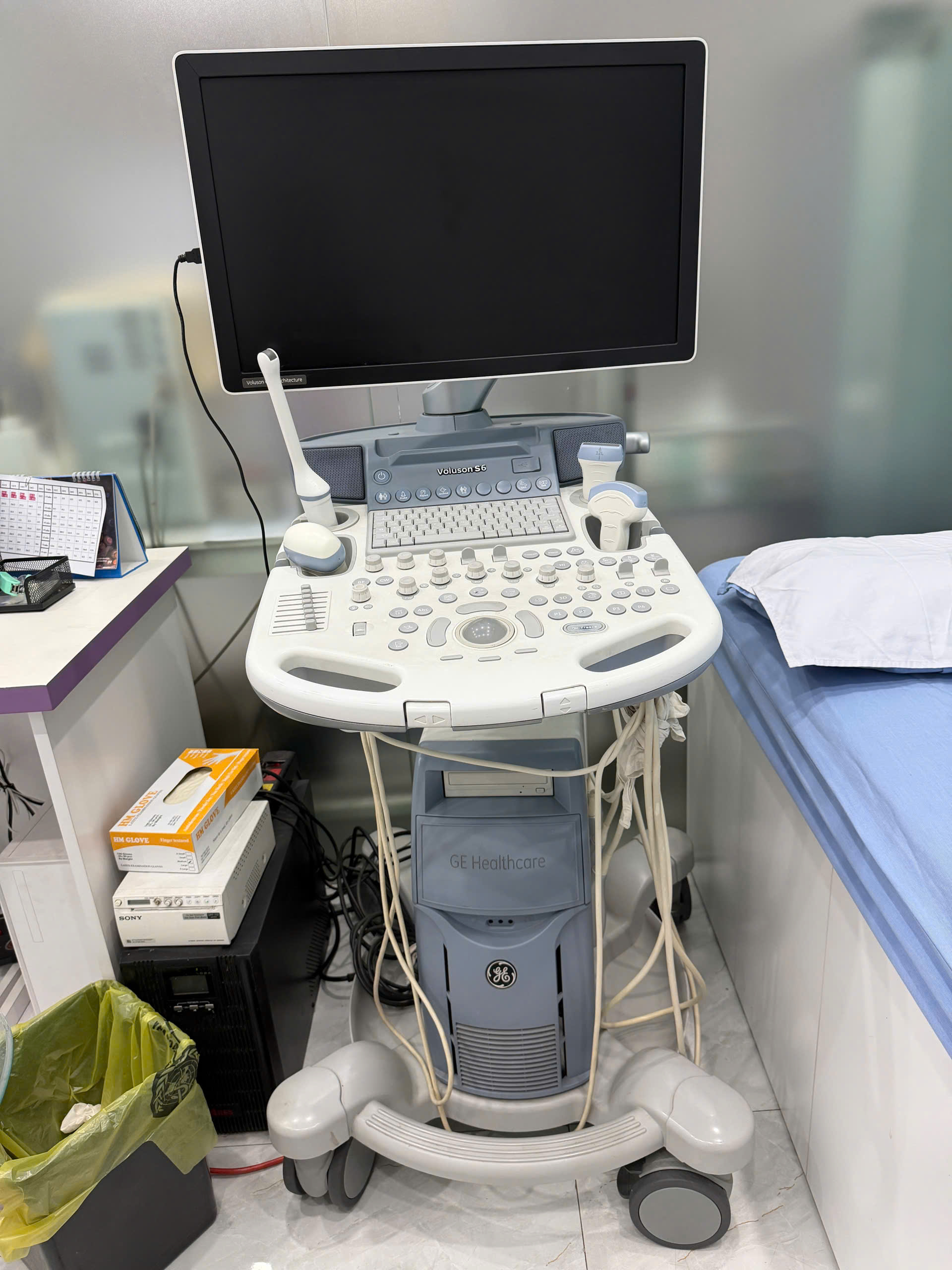
- NT measurement ultrasound at weeks 11-13 using advanced ultrasound equipment, with certified NT measurement credentials
- Double test, Triple test — in coordination with Medlatec Hospital Hanoi for accurate results
- NIPT — Samples sent to specialized laboratories (GenViet, Illumina)
- Results counseling — BSCKI. Trần Thị Thúy Lâm personally explains results and guides next steps
- Referral coordination — Referral to the National OB-GYN Hospital for amniocentesis when needed
BSCKI. Trần Thị Thúy Lâm has over 30 years of experience in prenatal care and obstetrics, formerly an OB-GYN physician at the Provincial General Hospital of Lào Cai.
Prenatal screening gives expectant mothers peace of mind and the best preparation for their baby. Don’t miss the golden window — the Combined test can only be done at weeks 11-13.
Call now: 0986 321 000 | Address: 125 Hàm Nghi, Kim Tân, Lào Cai
The clinic is open Monday through Saturday, mornings 7:30-11:30, afternoons 1:30-5:00 PM. Appointments can be made by phone and Zalo.